Ask any small business owner how things are going, and you’ll usually hear the same answer:
“Busy.”
Busy with customers.
Busy with emails.
Busy with hiring, fixing problems, chasing growth.
And while being busy can feel productive, it often masks a deeper issue: too much activity and not enough direction.
At Gate Rock Capital, we see many businesses that aren’t struggling because of lack of effort they’re struggling because effort is scattered. The work never stops, but progress feels slower than it should.
The problem isn’t commitment.
It’s focus.
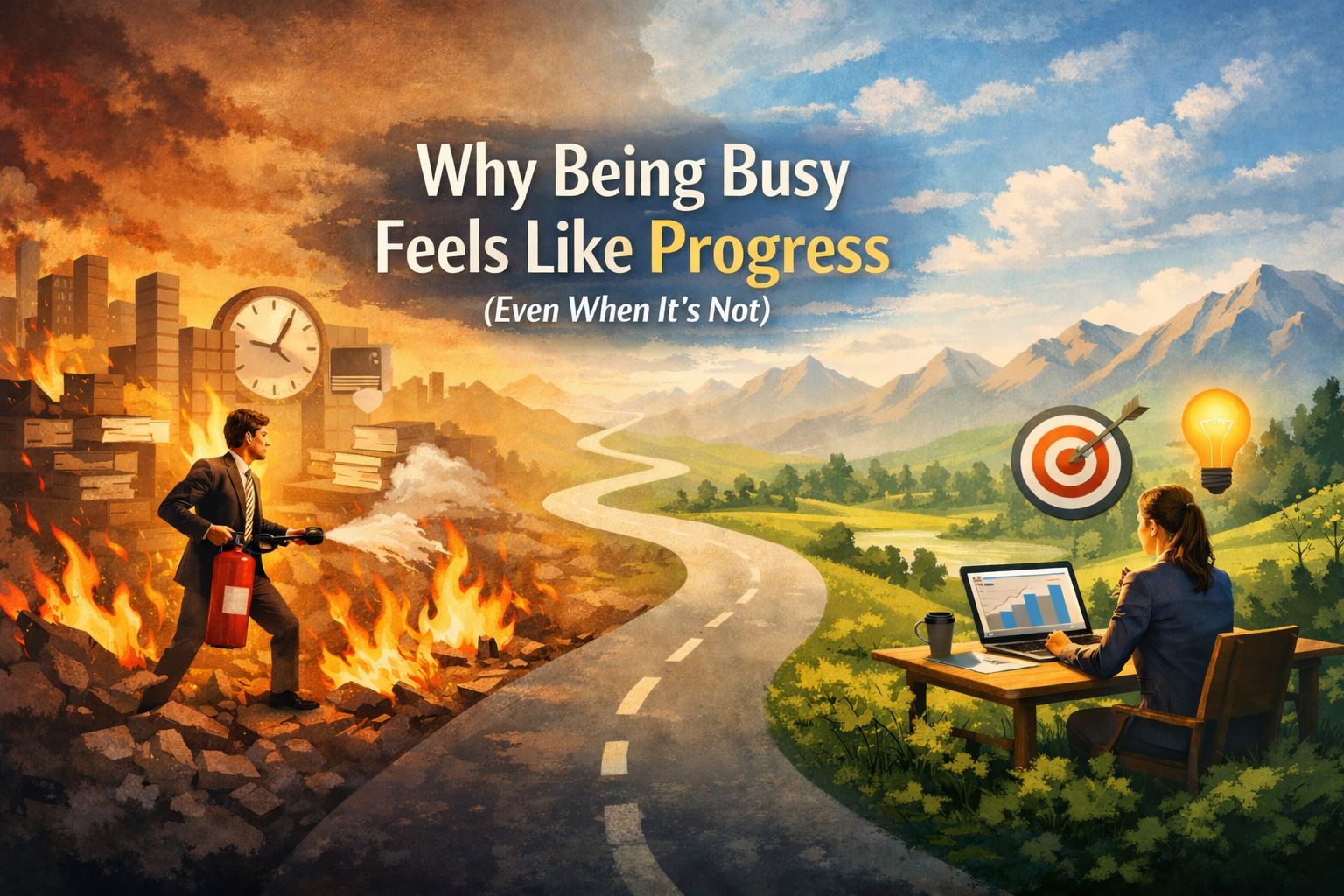
Why Being Busy Feels Like Progress (Even When It’s Not)
Constant activity gives immediate feedback. Emails get answered. Tasks get checked off. Fires get put out. It feels like momentum.
But motion without intention creates a dangerous illusion:
You’re working hard, yet the business isn’t moving forward in a meaningful way.
This is how companies end up:
-
Growing revenue without improving stability
-
Hiring more people without gaining leverage
-
Making decisions reactively instead of strategically
The calendar fills up, but clarity disappears.
The Difference Between Operators and Firefighters
Strong businesses eventually make a shift from firefighting to operating.
Firefighters react. Operators design.
Firefighters spend their days responding to problems as they arise. Operators spend time preventing the problems they already know are coming.
That difference shows up everywhere:
-
In how decisions are made
-
In how time is protected
-
In how growth is approached
Most businesses don’t fail because they make bad decisions. They fail because they don’t make enough intentional ones.
When Everything Feels Urgent, Nothing Is Strategic
One of the clearest signs a business is stuck in “busy mode” is when everything feels urgent.
Emails. Clients. Vendors. Team issues. Admin work.
Urgency crowds out thinking. And when thinking disappears, the business becomes reactive by default.
That’s when owners stop asking:
-
Is this actually moving us forward?
-
Is this the best use of our resources right now?
-
What decision are we avoiding by staying busy?
Silence is uncomfortable but it’s often where the most important answers live.
The Cost of Avoiding Fewer, Better Decisions
Being busy can also be a form of avoidance.
Big decisions are uncomfortable:
-
Letting go of an unprofitable client
-
Changing pricing
-
Saying no to opportunities that don’t fit
-
Pausing growth to fix foundations
Staying busy delays those choices. But delay has a cost and it compounds quietly.
Over time, businesses that avoid hard decisions end up with:
-
Messy operations
-
Thin margins
-
Burned-out leadership
-
Growth that feels heavier, not easier
How High-Quality Businesses Protect Thinking Time
The strongest operators don’t just manage tasks they protect space to think.
That looks like:
-
Blocking time for planning, not just execution
-
Reviewing numbers regularly instead of reacting emotionally
-
Asking “what matters most right now?” — often
-
Making fewer decisions, but standing behind them
This discipline doesn’t slow the business down. It speeds it up — by reducing wasted effort.
Productivity Isn’t About Doing More
True productivity isn’t about how much you get done. It’s about whether what you’re doing actually matters.
That requires:
-
Clear priorities
-
Financial visibility
-
Decision frameworks
-
Willingness to pause
When businesses get this right, something shifts. Growth feels lighter. Teams align faster. Owners stop carrying everything themselves.
Final Thoughts
Being busy is easy.
Being intentional takes discipline.
But the businesses that last the ones that scale sustainably aren’t the ones that worked the hardest. They’re the ones that learned when to slow down, think clearly, and choose direction over motion.
Sometimes the most productive move isn’t doing more.
It’s deciding better.
DISCLAIMER: This content is for informational purposes only. Gate Rock Capital and its affiliates do not provide financial, legal, tax or accounting advice.